

VRF Systems
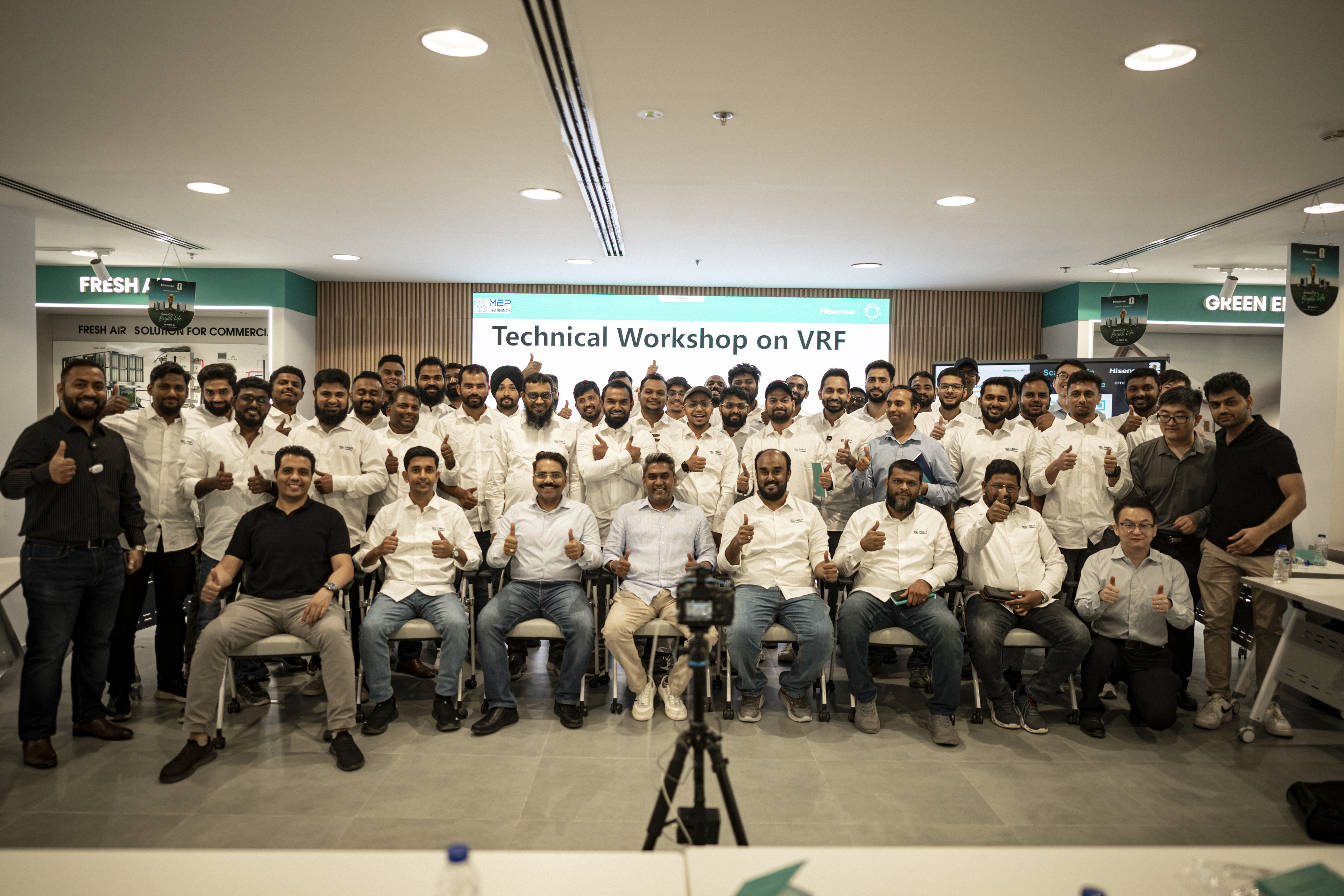
Presented by Mr. Adnan, with support from the Hisense HVAC Middle East team, the session combined technical explanation with visual demonstrations and real equipment giving engineers an opportunity to understand what actually happens inside a VRF system rather than seeing it only through drawings and catalogues.
From Networking to Technical Deep Dive
The evening began with networking, giving engineers from different companies an opportunity to connect before moving into the technical session.
The workshop then moved into the fundamentals and practical operation of VRF technology.
Seeing What the Drawings Cannot Show
VRF systems are often understood through piping layouts, equipment schedules, control diagrams, and manufacturer data.
But many of the most important components remain hidden once a system is installed.
The Hisense Experience Center changed that.
Engineers were able to see transparent VRF systems and internal components directly, making it easier to understand how the refrigeration circuit, components, controls, and system operation come together.
Animations, flow diagrams, component numbering, and live visuals were used throughout the session to make the technical concepts easier to follow.
Inside the VRF System
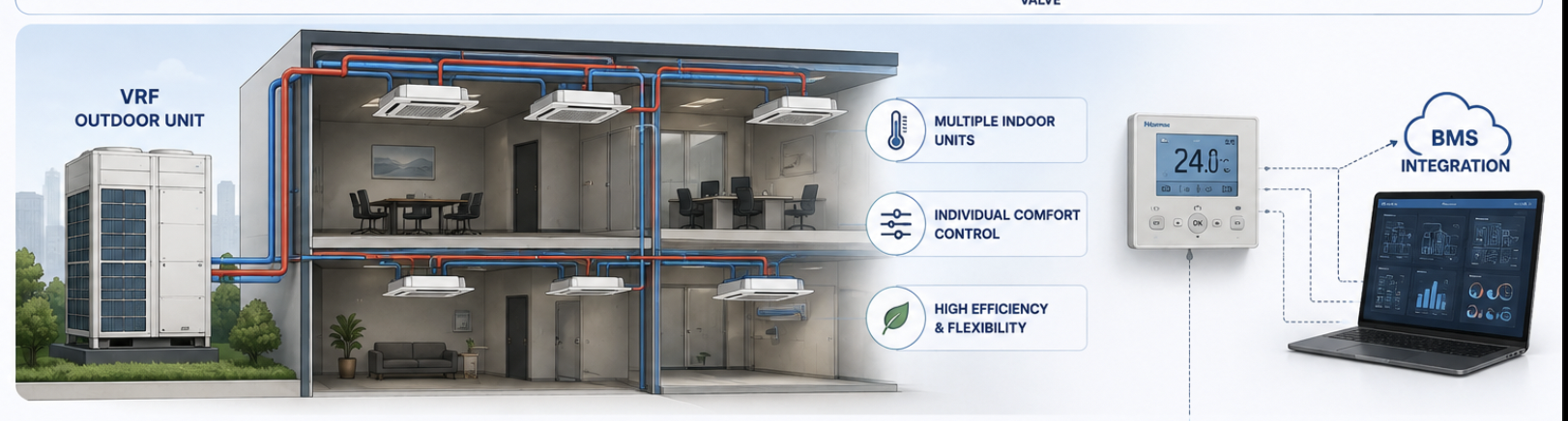
The workshop explored the working principles, major components, refrigeration cycle, and control strategies of VRF systems.
The session also touched on practical applications such as BMS integration, fresh-air solutions, centralised control, billing, drainage monitoring, and comfort features.
The combination of technical explanations and real system visuals helped engineers understand how these elements work together in an actual VRF installation.
Understanding the Refrigeration Cycle
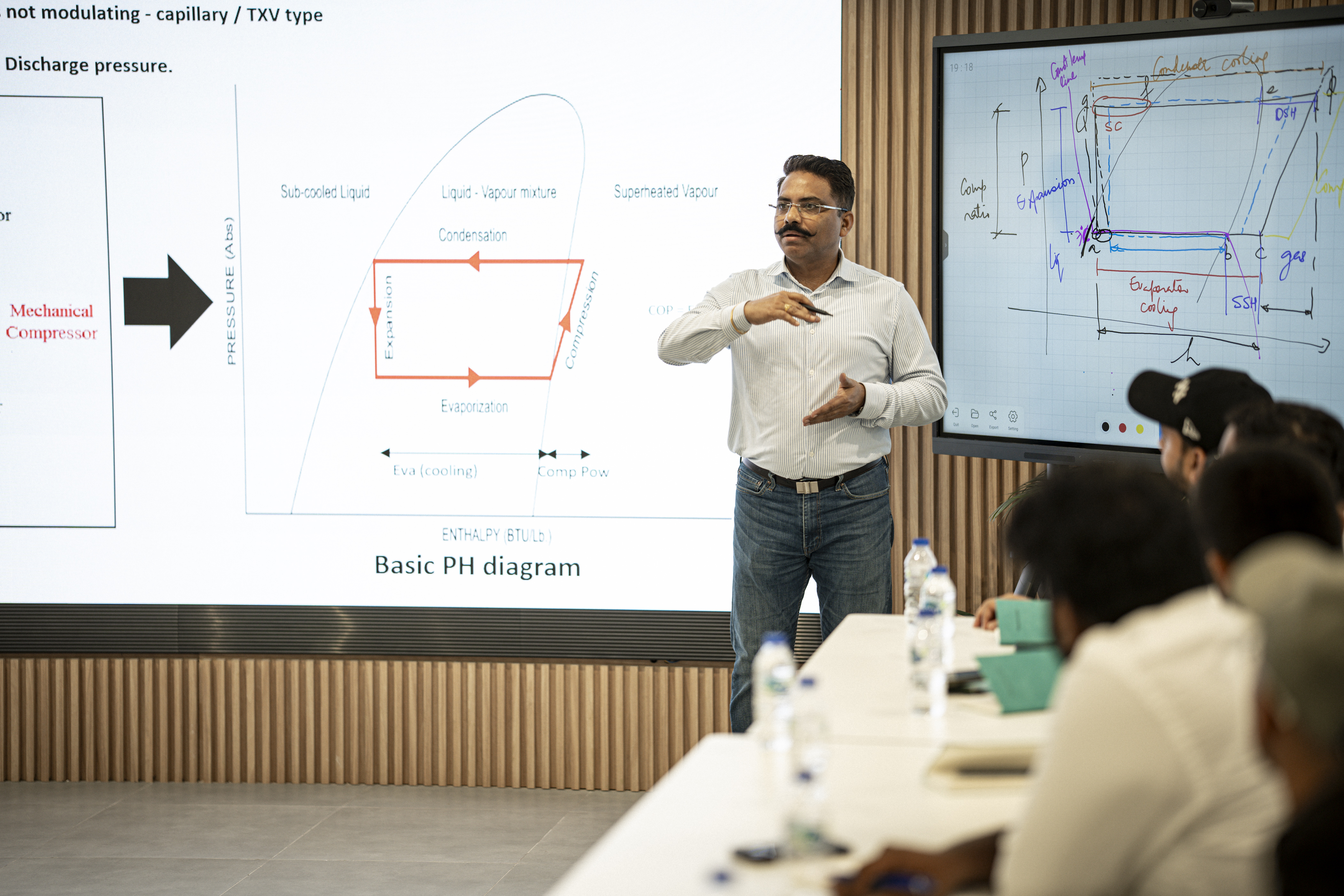
One of the particularly valuable parts of the session was the discussion around the P-h diagram and refrigeration cycle.
Instead of treating the refrigeration cycle as something engineers simply need to memorise, the session helped connect the different stages to the actual components and operation of the VRF system.
Seeing the equipment alongside the explanation made the relationship between theory, components, and system behaviour much easier to understand.
Why Real Equipment Changes the Learning
There is a major difference between knowing what a component does and actually seeing where it sits within the system.
The practical demonstrations allowed engineers to connect what they already see in drawings with the physical equipment behind those drawings.
That perspective is particularly valuable when engineers are involved in design, coordination, installation, commissioning, troubleshooting, or system operation.
Key Takeaways
The workshop reinforced several important ideas:
- Understanding how a VRF system works is more valuable than simply knowing its components.
- Visualising the refrigeration cycle makes complex concepts easier to follow.
- The P-h diagram provides a clearer understanding of refrigeration processes.
- Controls and BMS integration are important parts of modern VRF systems.
- Fresh-air, billing, drainage, and comfort solutions add another layer to system design.
- Practical exposure can bridge the gap between engineering theory and actual equipment.
Event Pictures

Hosted by Hisense HVAC
The event was supported by Hisense HVAC Middle East and Africa.
Special appreciation to Mr. Adnan Khan, Mr. Dharmesh Sawant, and the Hisense HVAC team for hosting the MEP community and creating an environment where engineers could learn directly from real systems.
Beyond the Experience Center
The strongest takeaway from the workshop was simple: sometimes the best way to understand an engineering system is to see it working in front of you.
The session brought together theory, diagrams, controls, refrigeration principles, and physical equipment in one place.
That made the workshop about more than VRF technology.
It demonstrated the value of learning by seeing, understanding by connecting, and taking that understanding back into real projects.