


.jpg)
Understanding the Building Behind the Controls
A BMS is more than a collection of control points.
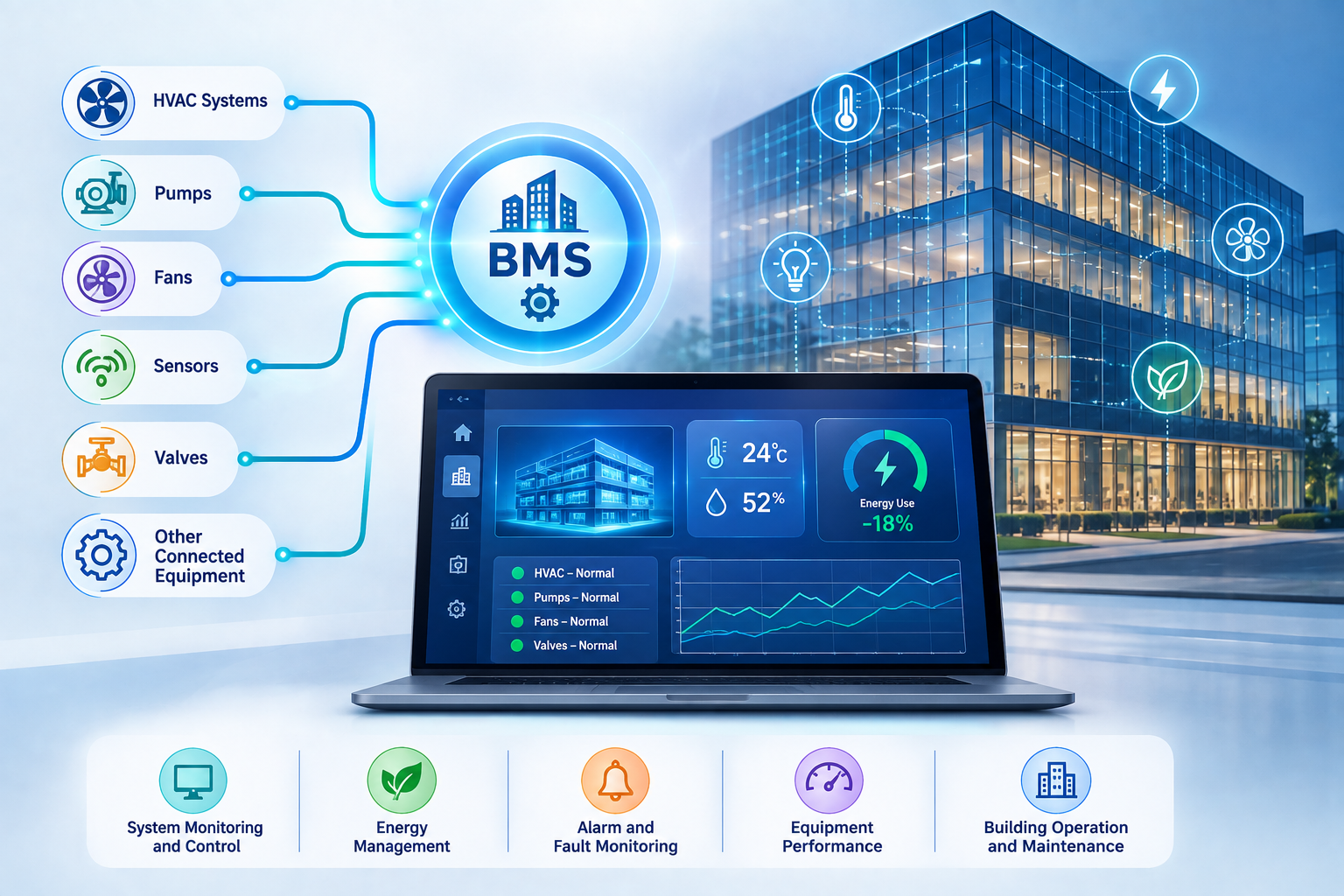
The session explored how BMS brings together different building services, including HVAC systems, pumps, fans, sensors, valves, and other connected equipment, allowing facility teams to monitor and operate them from a central platform.
The discussion also covered the role of BMS in:
- System monitoring and control
- Energy management
- Alarm and fault monitoring
- Equipment performance
- Building operation and maintenance
Why BMS Matters in MEP Engineering
Modern buildings operate as interconnected systems. A well-designed HVAC system, for example, needs more than correctly selected equipment it also needs the right monitoring and control strategy.
The workshop highlighted an important point for engineers: BMS design should not stop at listing control points.
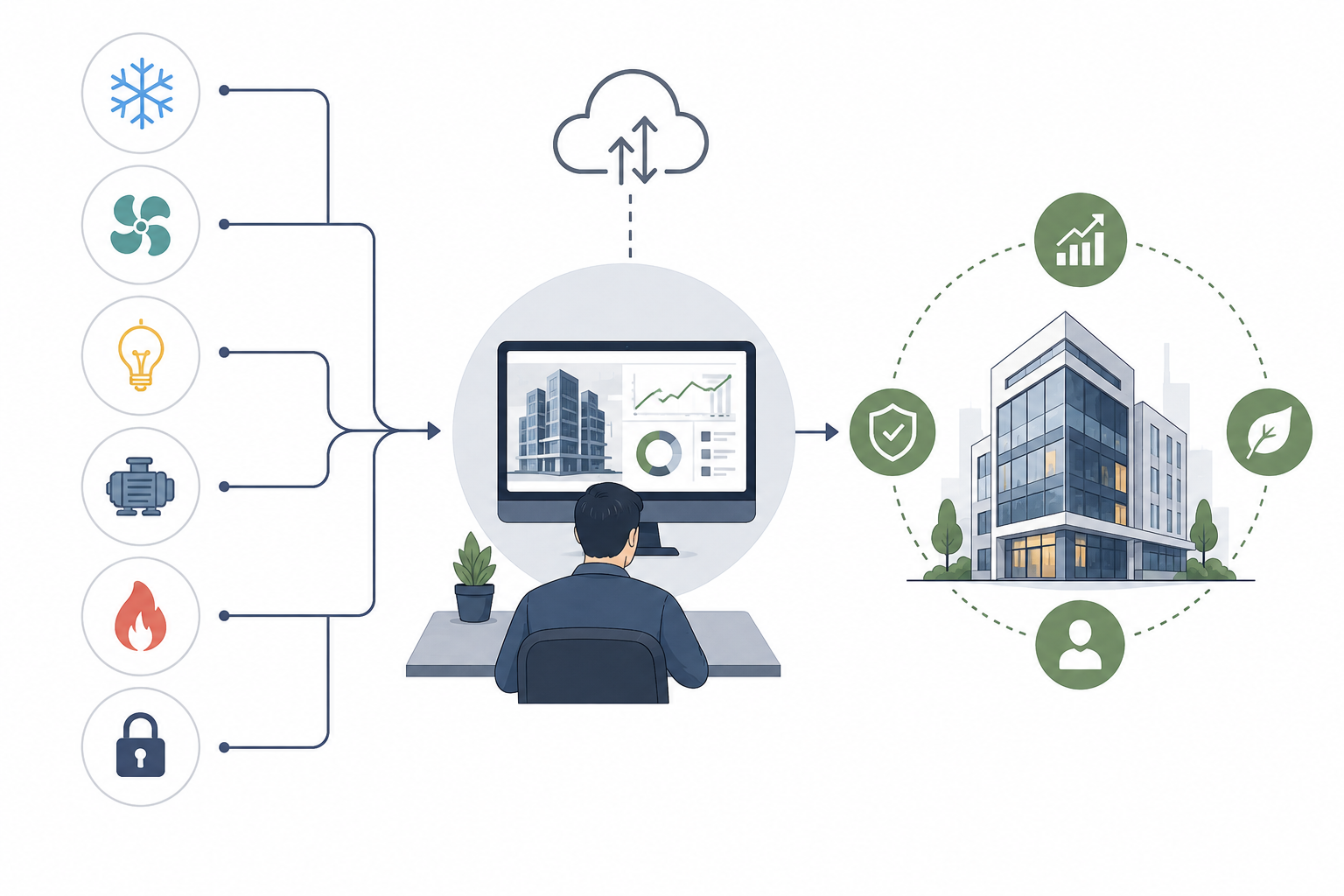
Engineers should understand what needs to be monitored, what needs to be controlled, how different systems interact, and how those decisions translate into actual building performance.
Key Takeaways
The session highlighted how BMS can help improve:
- Monitoring and control of building systems
- Energy management and operational efficiency
- Fault and alarm response
- Coordination between different MEP systems
- Overall building performance
Event Pictures

The Bigger Connection
The workshop encouraged engineers to look at buildings as connected systems rather than individual components.
HVAC equipment, pumps, valves, sensors, controllers, and control logic all work together to determine how a building performs in operation.
Understanding BMS gives engineers a clearer view of how design decisions move from drawings and specifications into real-world building performance.
It was a focused technical session, but the discussion connected directly to one of the most important aspects of modern MEP engineering: designing systems that perform effectively after the project is handed over.