


.jpg)
Reading the Air Beyond Temperature
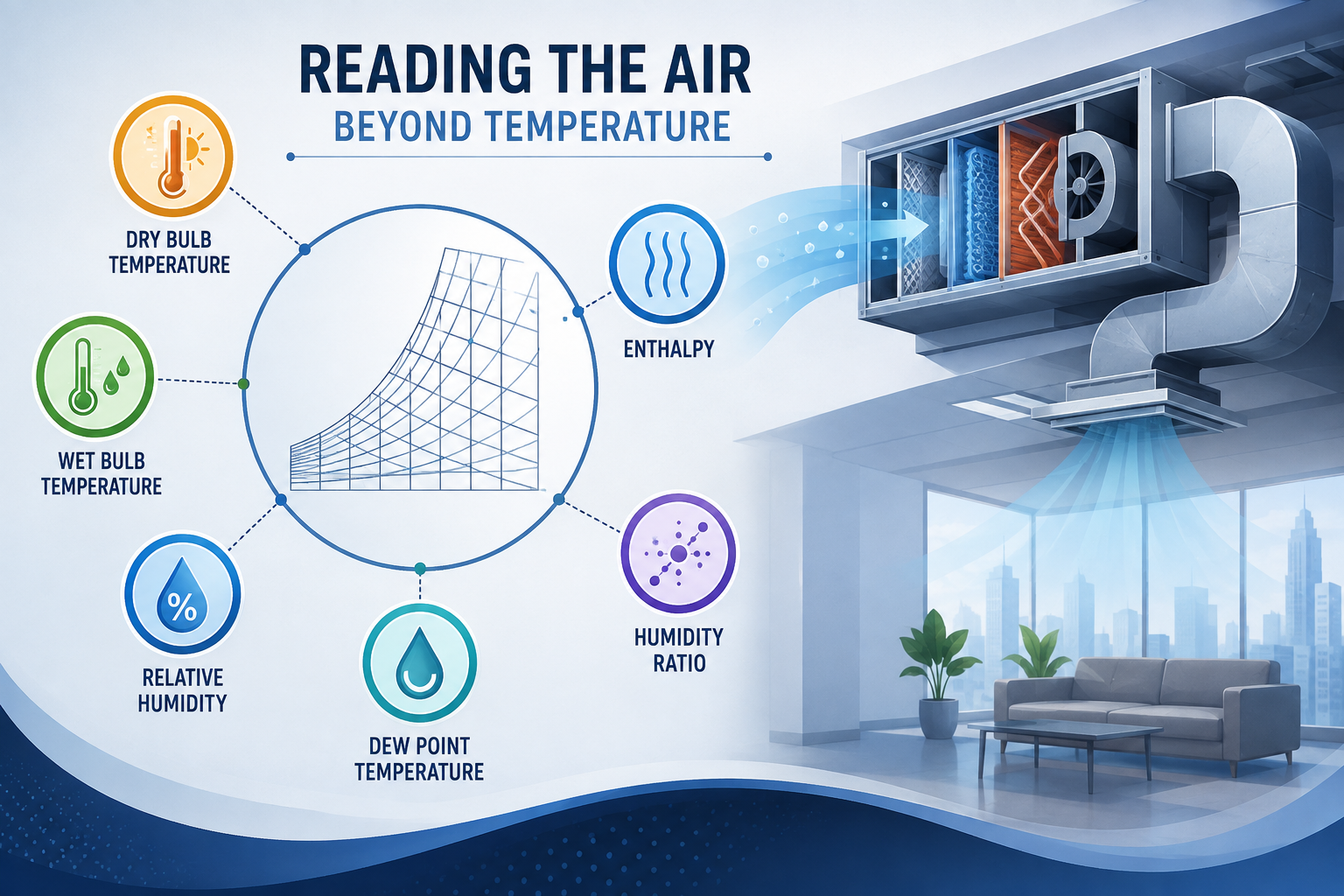
Psychrometrics is more than a collection of charts and formulas. It is about understanding the complete condition of air and how that condition changes throughout an HVAC system.
The session covered key air properties including:
- Dry Bulb Temperature
- Wet Bulb Temperature
- Relative Humidity
- Dew Point Temperature
- Humidity Ratio
- Enthalpy
From the Psychrometric Chart to Real HVAC Systems
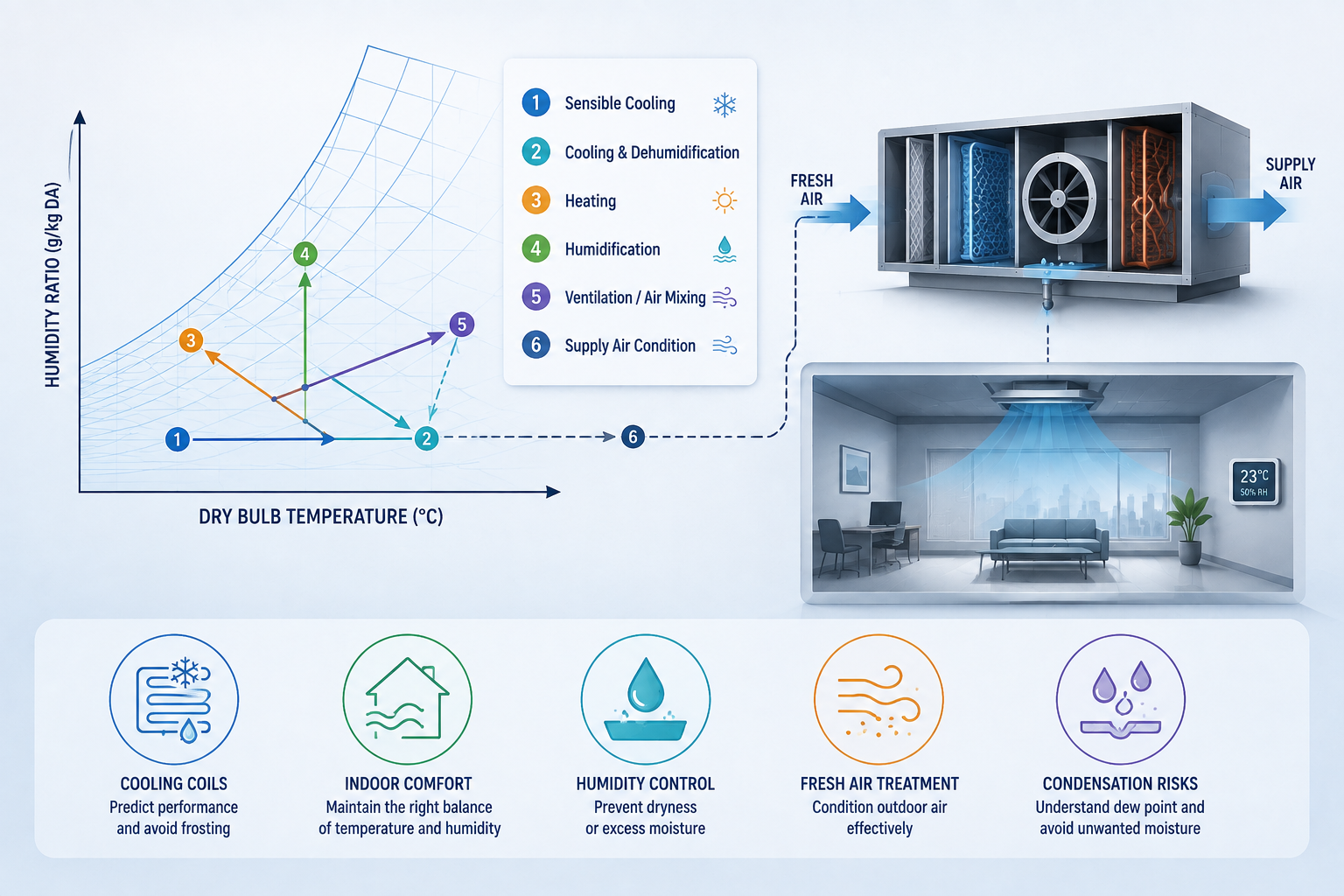
The workshop connected psychrometric concepts with practical HVAC applications.
Engineers explored how air behaves during processes such as cooling, heating, dehumidification, humidification, and ventilation. These concepts are essential when analysing cooling coils, fresh air treatment, indoor comfort, humidity control, and condensation risks.
Rather than looking at temperature alone, the session encouraged engineers to understand the complete state of air and what it means for system performance.
Why Psychrometrics Matters
A strong understanding of psychrometrics helps engineers make better HVAC design and operational decisions.
It provides the foundation for understanding:
- Cooling coil performance
- Dehumidification and moisture removal
- Fresh air treatment
- Indoor thermal comfort
- Humidity control
- Condensation and dew point conditions
- Heating and reheating processes
- Ventilation and air-conditioning processes
These principles may appear technical on paper, but they become much more meaningful when connected to what actually happens inside an HVAC system.
What We Learned Beyond the Chart
Psychrometrics can initially seem like one of the more complicated areas of HVAC engineering. But once the relationships between air properties become clear, the subject becomes much easier to understand.
This workshop showed that the psychrometric chart is not simply a technical tool it is a way of visualising what is happening to air throughout an HVAC system.