


.jpg)
Reading the Condition of Air
Air is more than just temperature.
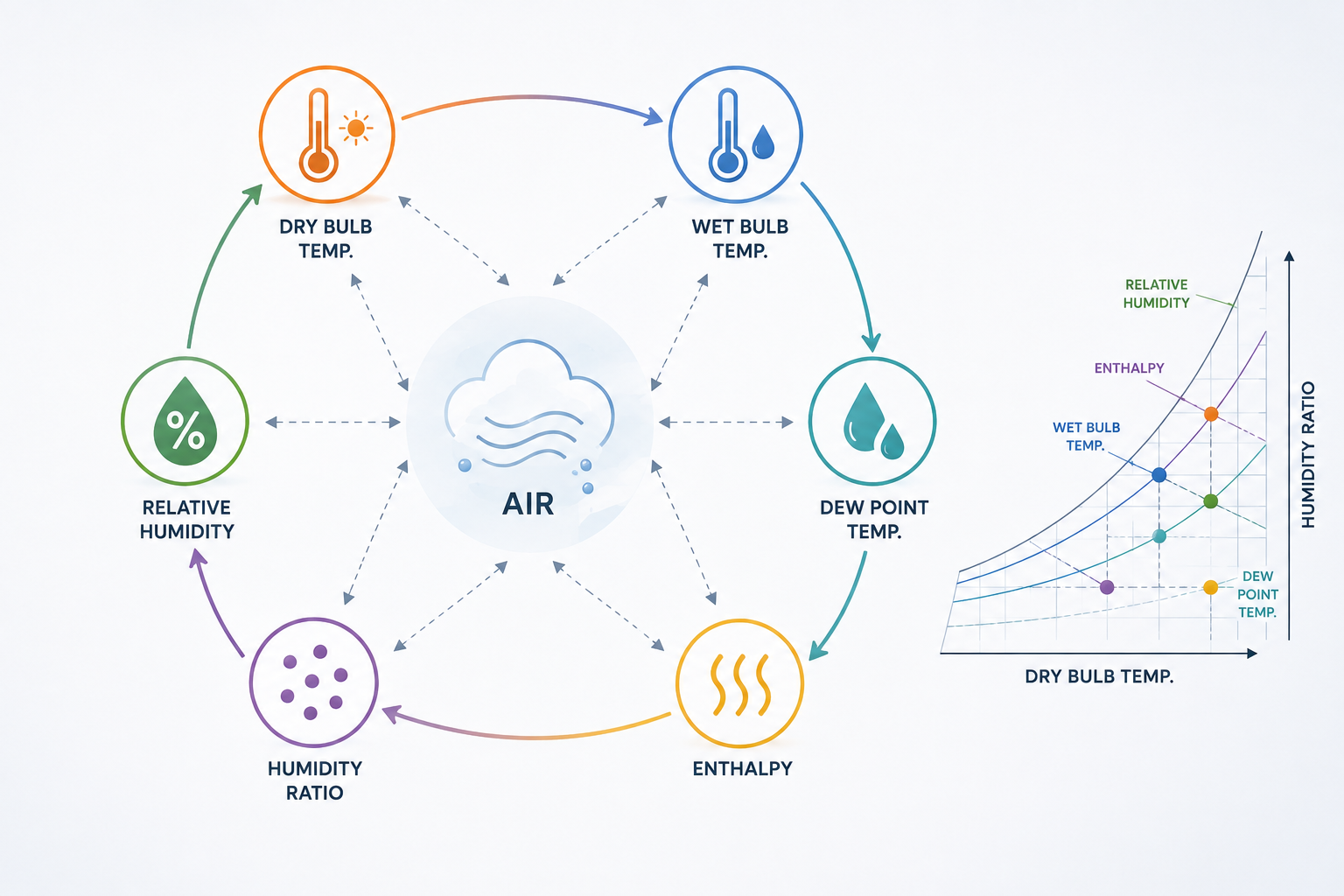
The workshop introduced the key properties used to describe the condition of air, including:
- Dry Bulb Temperature
- Wet Bulb Temperature
- Relative Humidity
- Dew Point
- Humidity Ratio
- Enthalpy
Rather than treating these properties individually, the discussion focused on understanding the relationships between them and how changes in one property influence the overall condition of air.
Beyond Temperature: Why Psychrometrics Matters
Psychrometrics plays a central role in understanding what happens to air inside an HVAC system.
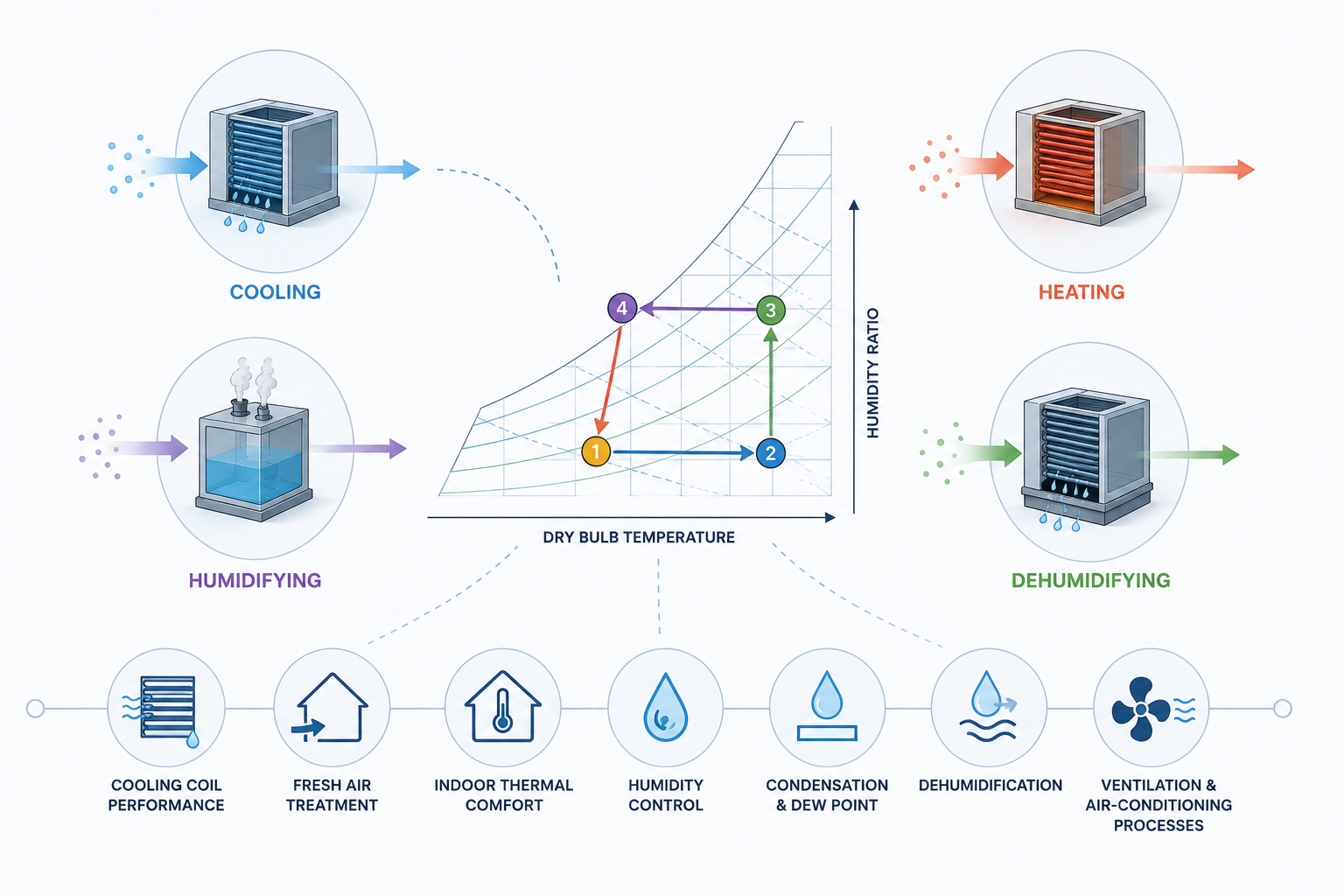
Whether air is being cooled, heated, humidified, or dehumidified, its temperature and moisture content change. Understanding these changes allows engineers to analyse processes more accurately and predict how a system will behave.
This knowledge is particularly important when dealing with:
- Cooling coil performance
- Fresh air treatment
- Indoor thermal comfort
- Humidity control
- Condensation and dew point
- Dehumidification
- Ventilation and air-conditioning processes
From the Chart to the HVAC System
The psychrometric chart is often introduced as a technical diagram, but its real value lies in what it helps engineers understand.
By tracing changes in air conditions, engineers can visualise processes that occur within an HVAC system and connect theoretical concepts with actual design requirements.
The workshop encouraged participants to look beyond individual temperature values and understand the complete state of air.
Event Picture

What We Took Beyond the Chart
Psychrometrics can initially appear complicated because several air properties need to be understood together.
Once those relationships become clear, however, the subject becomes much easier to apply.
This workshop helped simplify an important HVAC concept by connecting the psychrometric chart with practical engineering situations giving engineers a clearer way to understand how air behaves and why that matters in HVAC design.