


.jpg)
District Cooling: More Than Just Chilled Water
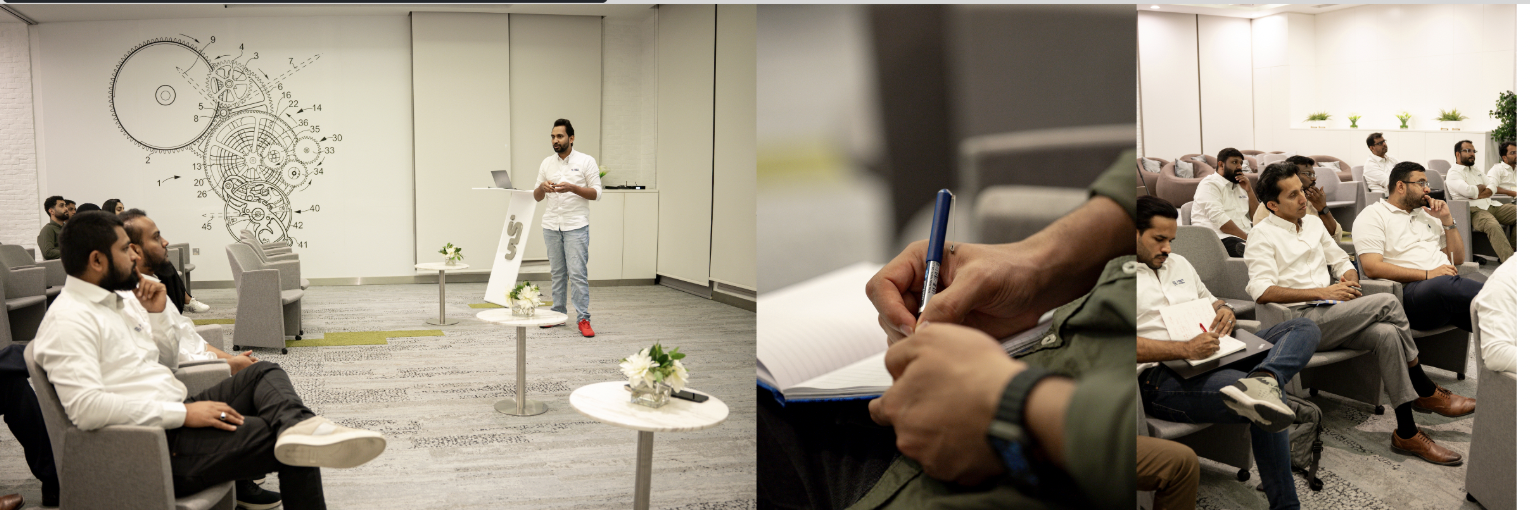
Presented by Mr. Sameer Hussain, the session looked beyond the basic concept of receiving chilled water and focused on how district cooling can shape loads, space planning, coordination, energy use, and long-term building operation.
When the Cooling Strategy Changes the Design
District cooling is not simply an alternative way to provide chilled water.
Choosing it can change how several parts of a project are approached from the early design stage.
The discussion explored its impact on:
- Electrical load requirements
- Plant room and equipment space
- Cooling system design
- Space planning
- Authority coordination
- Building-to-network interfaces
- Energy consumption
- Long-term operation
The key message was clear: the cooling strategy needs to be considered early because it can influence decisions far beyond the mechanical design.

What Happens Between the Building and the Network?
One of the important areas discussed was the interface between the building's HVAC system and the district cooling network.
Engineers need to understand how the connection works, what the project is responsible for, what needs to be coordinated with the district cooling provider, and how these requirements affect the overall design.
This makes district cooling an important coordination topic not just an HVAC topic.
Why District Cooling Matters in Large Developments
District cooling is widely used across major developments, particularly where large and concentrated cooling demands make a centralised approach practical.
The workshop explored how this approach can reduce the electrical infrastructure associated with individual project-based cooling plants and can support more efficient centralised cooling operation.
From a sustainability perspective, the discussion also highlighted why district cooling can play an important role in reducing the energy and infrastructure impact associated with cooling large developments.

One Decision. Multiple Design Consequences.
A cooling system decision made early can create a chain of effects across the project.
It can influence:
Cooling strategy → Electrical load → Plant space → Architectural coordination → MEP interfaces → Operation
This is why engineers need to evaluate district cooling from a complete-project perspective, rather than looking at it as simply a connection to an external chilled-water source.
Key Takeaways
The session highlighted several important principles:
- District cooling can significantly influence early-stage project planning.
- Building and district cooling interfaces require careful coordination.
- Cooling strategy affects electrical, architectural, and mechanical requirements.
- Space and plant requirements can change depending on the selected approach.
- Energy and long-term operational considerations should be part of the decision.
- Engineers need to understand the complete system, not just the equipment inside the building.
Event Pictures
Looking Beyond the Chilled Water Connection
The workshop demonstrated an important aspect of MEP engineering: one design decision can influence an entire project.
District cooling may appear to be a straightforward connection between a building and a cooling network, but the decision affects much more from electrical infrastructure and space planning to coordination and long-term performance.
By looking at district cooling through this wider lens, engineers can make better-informed decisions at the stage when those decisions have the greatest impact.
The session turned a familiar HVAC concept into a broader project discussion connecting cooling, coordination, energy, space, and design strategy in one conversation.