


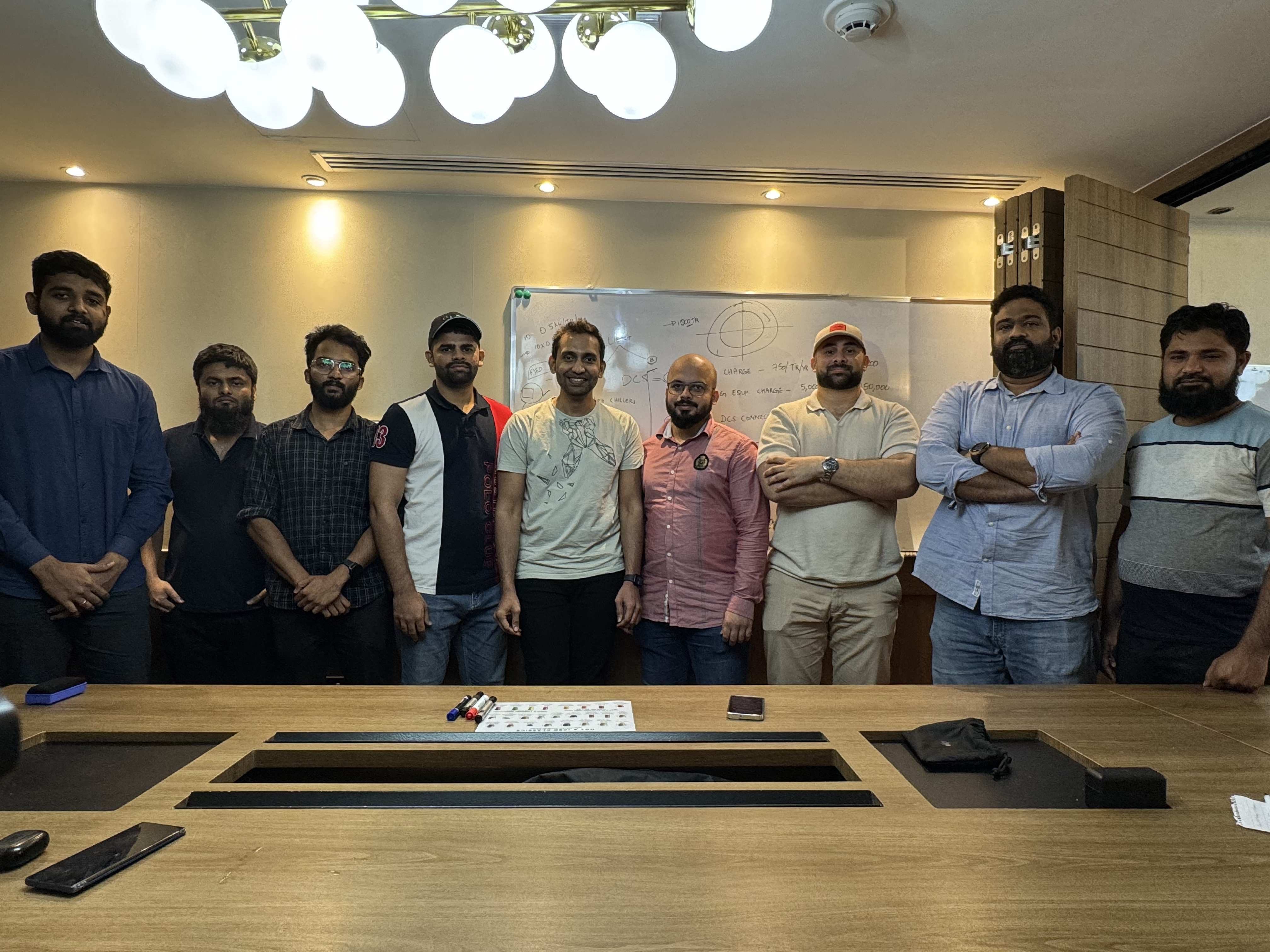
What Got Us Talking
This time, the conversation turned to something quietly reshaping how we design buildings: district cooling.
We dug into how it changes a project's design approach from day one not just which chiller to pick, but how it ripples into electrical load calculations, plant room space, coordination between disciplines, and overall project planning. The room also spent real time comparing district cooling against traditional in-house air-cooled chiller systems where each makes sense, and where the trade-offs actually live.
More Than Just Cold Air
District cooling isn't a niche topic anymore it's becoming a core piece of sustainable building design, and large-scale developments are increasingly built around it.
As engineers, understanding how the system works is only half the job. The other half is understanding what it does to a project: the electrical infrastructure, the space it frees up (or demands), and how early it needs to be factored into planning. That's exactly the ground this session covered.

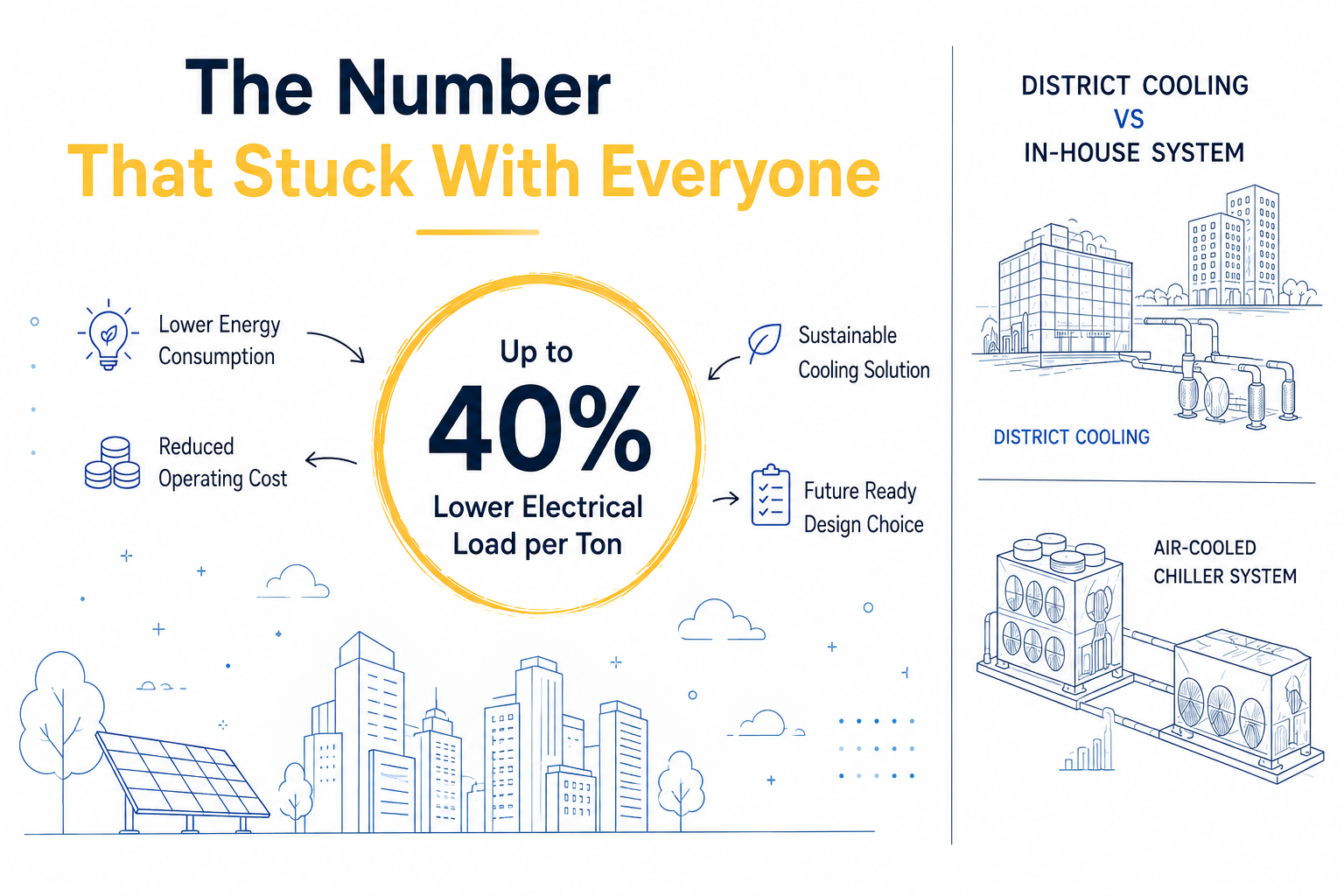
The Number That Stuck With Everyone
District cooling can meaningfully reduce the electrical load required per ton of cooling, compared to in-house air-cooled chiller systems.
That single number matters. It's why district cooling deserves a serious look on any large-scale or sustainability-driven project not as a trend, but as a genuinely efficient option worth designing around.
No Slides, Just Voices

No slides-only monologue here this was a real exchange. Everyone brought their own field experience to the table, which is what made the session feel practical instead of theoretical. Good engineering conversations rarely happen in a straight line, and this one didn't either and that's exactly why it worked.
Looking Back
Our second meetup showed that a meaningful engineering community doesn't need a conference hall.
It simply needs curious engineers, honest conversations, and a place to learn together.
From one coffee table discussion to a growing community, this was another step in building The MEP Club.