



Choosing the Right HVAC System for the Project
Presented by Mr. Sameer Hussain, the session explored how engineers can evaluate different HVAC options by looking beyond equipment specifications and considering the wider requirements of the project.
Where Does HVAC Selection Actually Begin?
HVAC system selection does not start with choosing a piece of equipment.
It starts with understanding the project itself.
The workshop explored the factors that influence this decision, including:
- Type and size of the project
- Client requirements and expectations
- Available budget
- Space and architectural constraints
- Energy efficiency targets
- Authority requirements
- Maintenance strategy
- Long-term operating requirements
The discussion highlighted how the same HVAC system may be suitable for one project but completely unsuitable for another.

One Project, Many Possible Systems
Engineers may have several options available, including DX systems, VRF, chilled water systems, air-cooled chillers, water-cooled chillers, and district cooling.
The challenge is not simply knowing how each system works.
The real engineering decision is understanding which system makes the most sense for the specific project.
The session encouraged engineers to compare alternatives based on technical performance, cost, available space, energy consumption, maintenance, constructability, and operational requirements.
A Decision That Shapes the Entire Project
An HVAC decision made during the early design stage can influence almost every part of the project.
It can affect:
- Plant room and equipment space
- Electrical load
- Ceiling and shaft coordination
- Initial project cost
- Energy consumption
- Maintenance requirements
- Installation and coordination
- Long-term building operation
- Occupant comfort

Engineering Beyond the Calculations
One of the key messages from the workshop was that good HVAC engineers need to understand more than calculations.
A technically efficient system may not always be the most appropriate choice if it does not fit the project's budget, available space, authority requirements, maintenance strategy, or operational expectations.
The best solution comes from balancing technical, commercial, practical, and operational considerations.
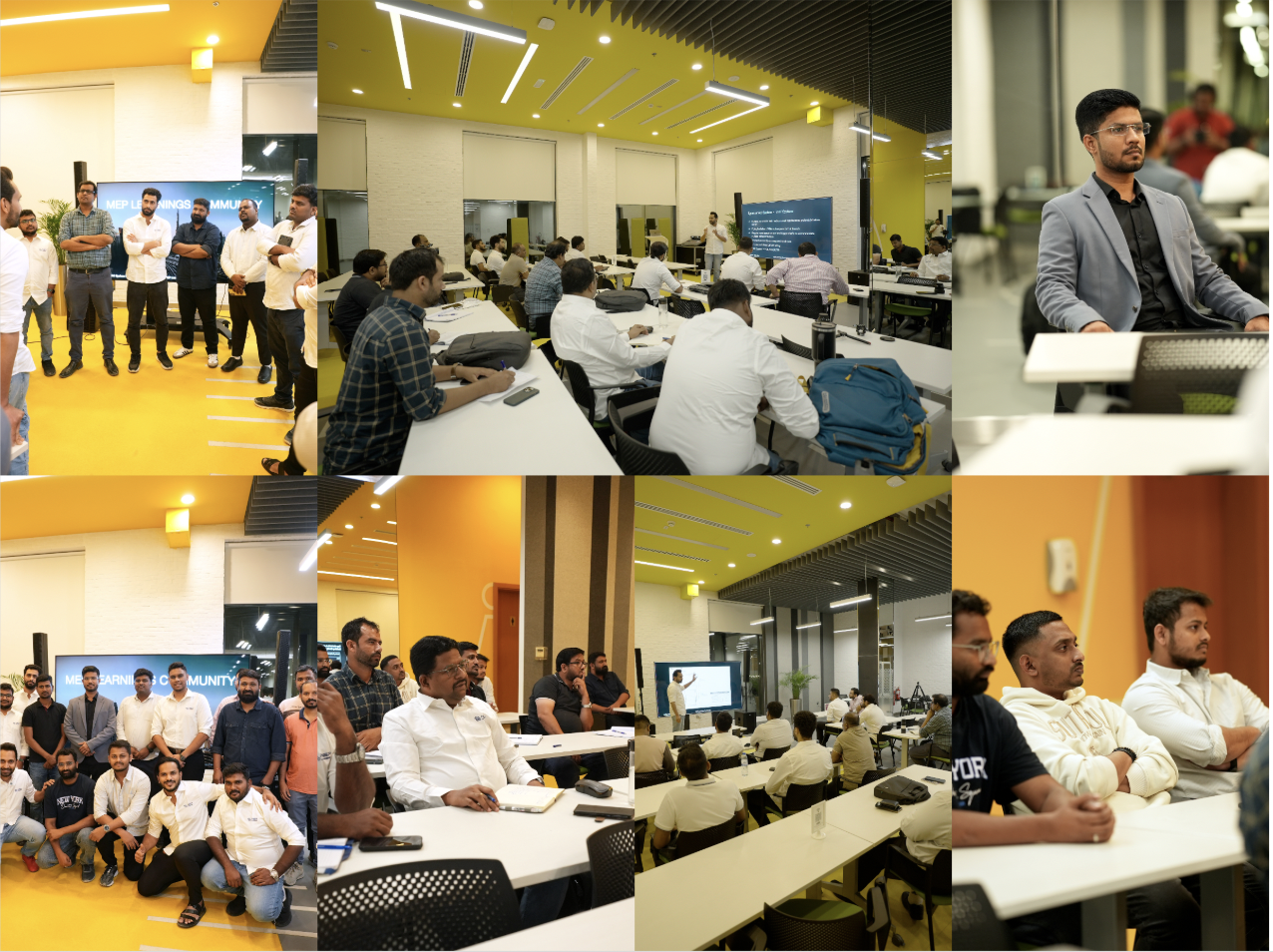
Event Pictures
Key Takeaways
The session reinforced a simple principle:
Do not select an HVAC system first and then try to make the project fit around it. Understand the project first, then select the system.
Engineers should evaluate multiple options, understand their advantages and limitations, and consider how each choice will perform throughout the building's life cycle.
The discussion helped participants develop a more structured way of approaching one of the most important early-stage HVAC decisions.