
What Is MEP Fix Classification?
MEP fix classification is a way of organizing Mechanical, Electrical, and Plumbing activities according to construction progress and the sequence of work.
It helps determine which activities must be completed first, which follow after plastering and finishing, and which should be carried out once the building is sufficiently clean and ready for sensitive equipment installation.
MEP activities must be coordinated with civil, structural, and architectural works to avoid rework, service clashes, and project delays.
This classification also supports manpower planning, material procurement, scheduling, and overall project progress monitoring.
First Fix
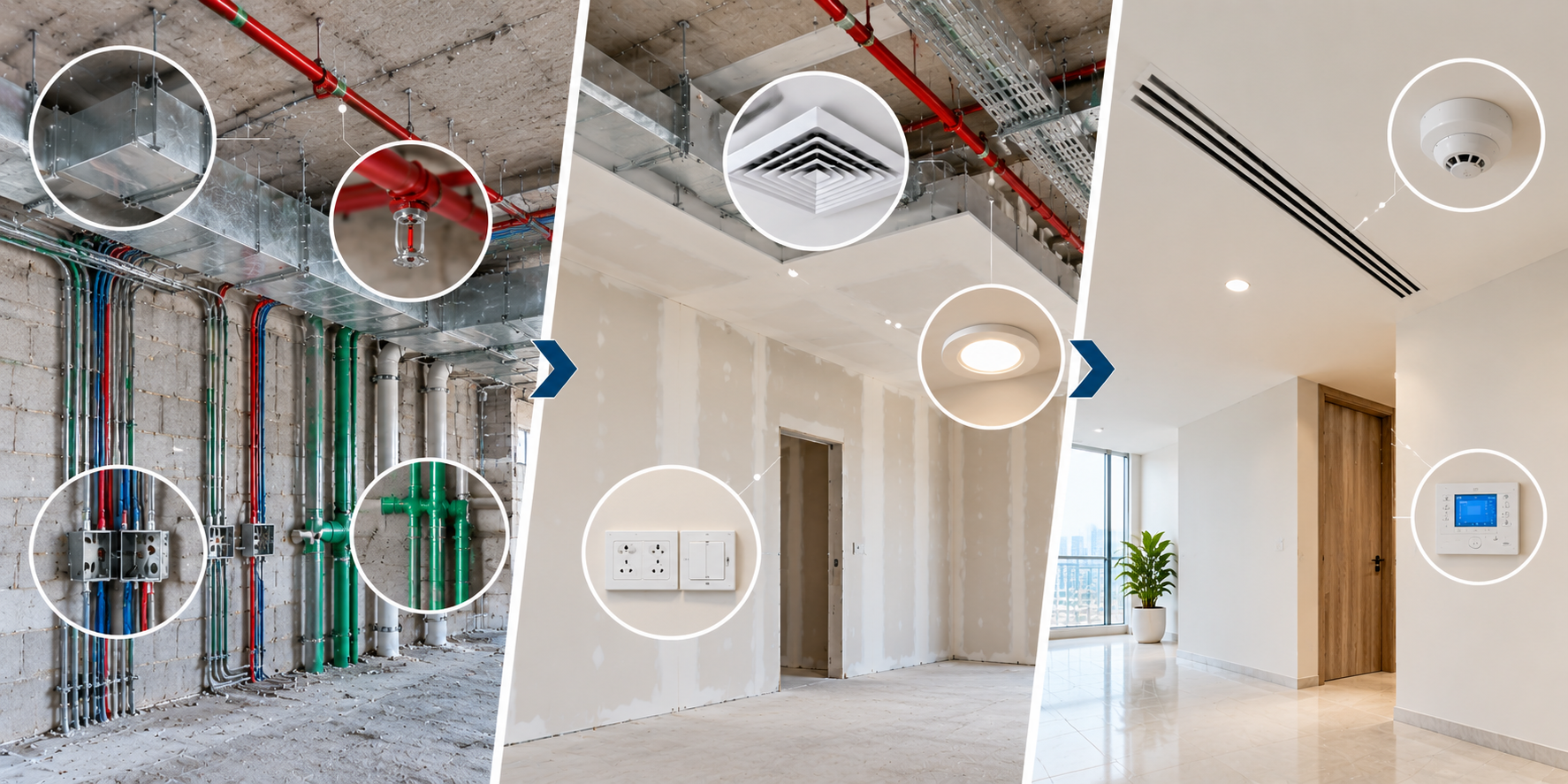
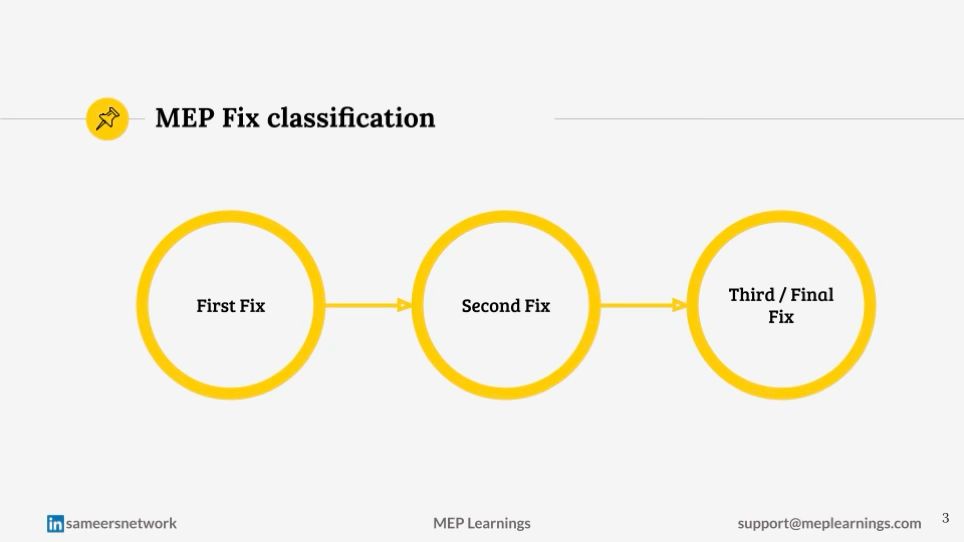
First Fix generally covers the initial MEP installation activities carried out during the structural and early construction stages, typically before plastering and closing concealed services.
Typical activities include:
- HVAC: Installation of concealed ductwork, refrigerant piping, and other services that must be installed before ceilings or walls are closed.
- Electrical: Installation of conduits, concealed wiring routes, and electrical back boxes.
- Plumbing: Installation of concealed water supply pipes, drainage pipes, and sleeves through walls and slabs.
- Fire Protection: Installation of concealed fire-fighting pipework and sleeves, where applicable.
First Fix activities require close coordination with civil and architectural teams to ensure that openings, sleeves, and service routes are provided at the correct locations.
Second Fix
Second Fix generally includes the installation of visible or final service components after the relevant plastering and finishing work has progressed sufficiently.
Typical activities include:
- HVAC: Installation of air terminals, such as grilles and diffusers, and completion of accessible equipment connections.
- Electrical: Installation of switches, socket outlets, light fittings, and other electrical accessories.
- Plumbing: Installation of sanitary fixtures, taps, faucets, and other plumbing accessories.
- Fire Protection: Installation of sprinkler heads, fire hose cabinets, and other system components, subject to the required construction sequence.
The exact sequence depends on the project specifications, ceiling installation schedule, equipment requirements, and coordination with other trades.
Third Fix
Third Fix generally refers to final connections, testing, commissioning, and the installation or configuration of sensitive equipment. The term is not standardized across all projects, so its meaning should be confirmed in the project specifications.
Typical activities may include:
- HVAC: Final equipment connections, controls integration, testing, and commissioning.
- Electrical: Installation and configuration of sensitive electronic equipment, control panels, and selected devices.
- Plumbing: Final testing, adjustments, and verification of completed systems.
- Fire Protection: Final testing of fire alarm and life-safety system interfaces, device configuration, and integrated testing.
Sensitive electronic equipment should be installed when the environment is sufficiently clean, dry, and protected from construction dust and damage, in accordance with the manufacturer's requirements.
Testing and commissioning should be completed using approved procedures and the relevant inspection and testing requirements.
Why Is MEP Fix Classification Important?
MEP fix classification helps project teams:
- Plan activities in the correct construction sequence.
- Coordinate MEP works with civil and architectural activities.
- Schedule manpower, materials, and equipment efficiently.
- Reduce rework caused by premature installation or poor coordination.
- Protect finished components and sensitive equipment from construction damage.
- Support inspection, testing, commissioning, and project handover.