


Finalizing the HVAC System
Heating, ventilation, and air conditioning (HVAC) systems are integral to any building's design and operation.
A thorough HVAC system analysis is essential for client meetings and internal design team meetings, as well as before starting the Hourly Analysis Program (HAP).
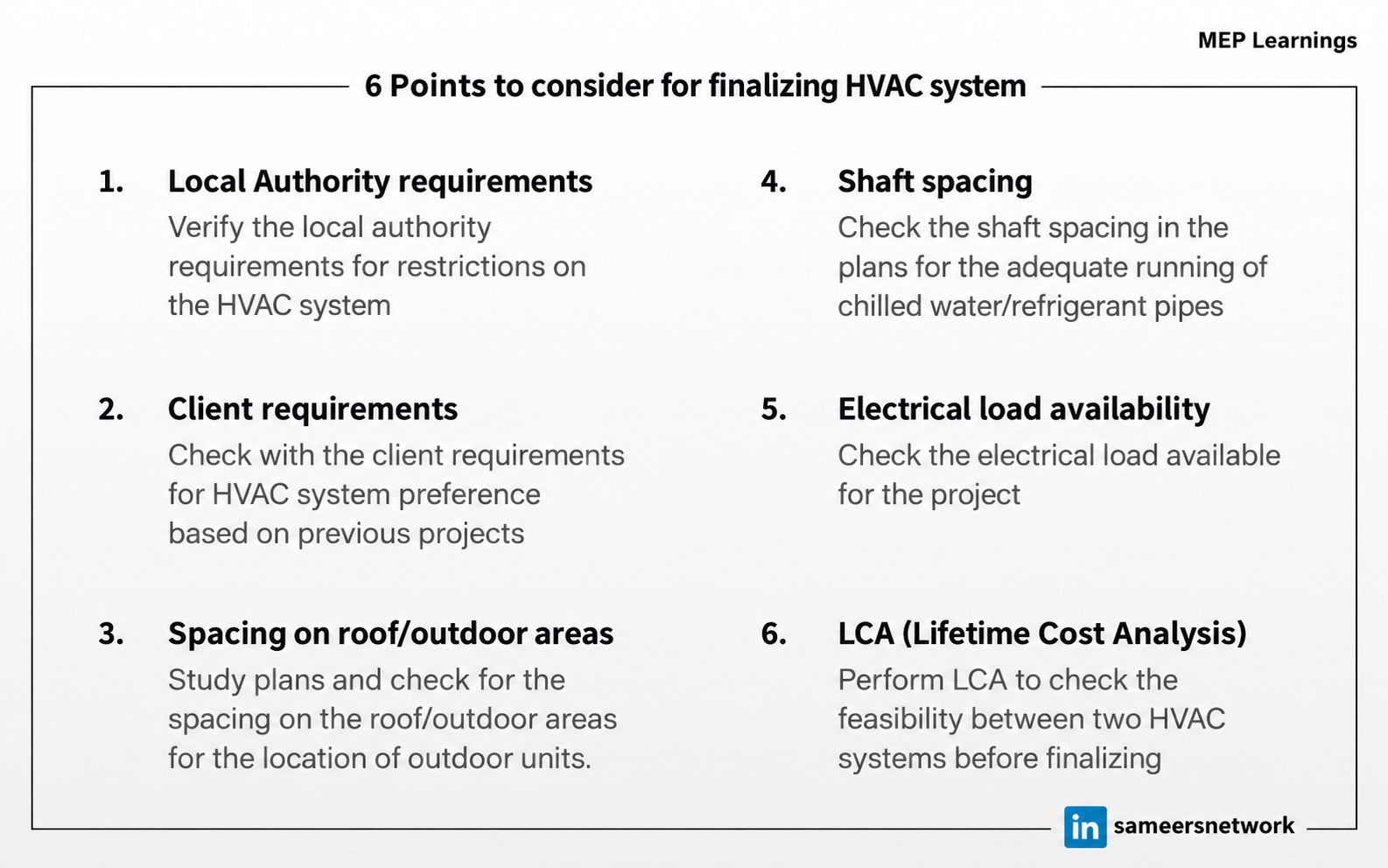
Here are 6 points to consider during HVAC system selection at the concept stage.
Local Authority Requirements
Before settling on an HVAC system, verify the local authority's requirements and restrictions.
Some locations may require specific systems, such as district cooling systems.
Awareness of these requirements will ensure your building complies with regulations and avoid potential issues during construction.
Space Availability
Study the building plans to ensure there is sufficient space on the roof or outdoor areas for outdoor units.
Adequate spacing is crucial for HVAC system functioning and maintenance.
Shaft Spacing
Examine the building plans to confirm that there is enough shaft spacing for chilled water or refrigerant pipes.
Proper shaft spacing is necessary to accommodate HVAC system components and ensure efficient operation.
Lifetime Cost Analysis (LCA)
Performing a Lifetime Cost Analysis (LCA) can help determine the most feasible choice if you're unsure between two HVAC system options.
LCA considers the initial investment, operational costs, maintenance expenses, and the system's expected lifespan.
By comparing the total costs of each option over their respective lifetimes, you can make a more informed decision about the most suitable system for the project.
Load Distribution
Consider the load distribution between the different HVAC system options.
Analyze the heating and cooling requirements for various building zones and ensure that the chosen system can efficiently and effectively meet these demands.
Proper load distribution will contribute to optimal energy consumption, occupant comfort, and overall system performance.
Client Preferences
Check with your client for any preferences regarding the HVAC system based on their previous project experiences.
Clients may have valuable insights into various systems' performance and maintenance that can help decision-making.
Conclusion
Selecting the right HVAC system is a crucial step in building design.
Considering the above points, one can make an informed decision leading to a more energy-efficient, comfortable, and cost-effective building.