

Here is a list of 20 interview questions on plumbing:
1) What is a single stack & Double stack system?
Ans) In a single stack system we have only one main riser for soil pipe and waste pipe connected with air vent pipe.
In a double stack system, we have 2 independent risers, one for waste pipe and one for soil pipe. Both the risers are connected with air vent pipes.
2) What are aerators?
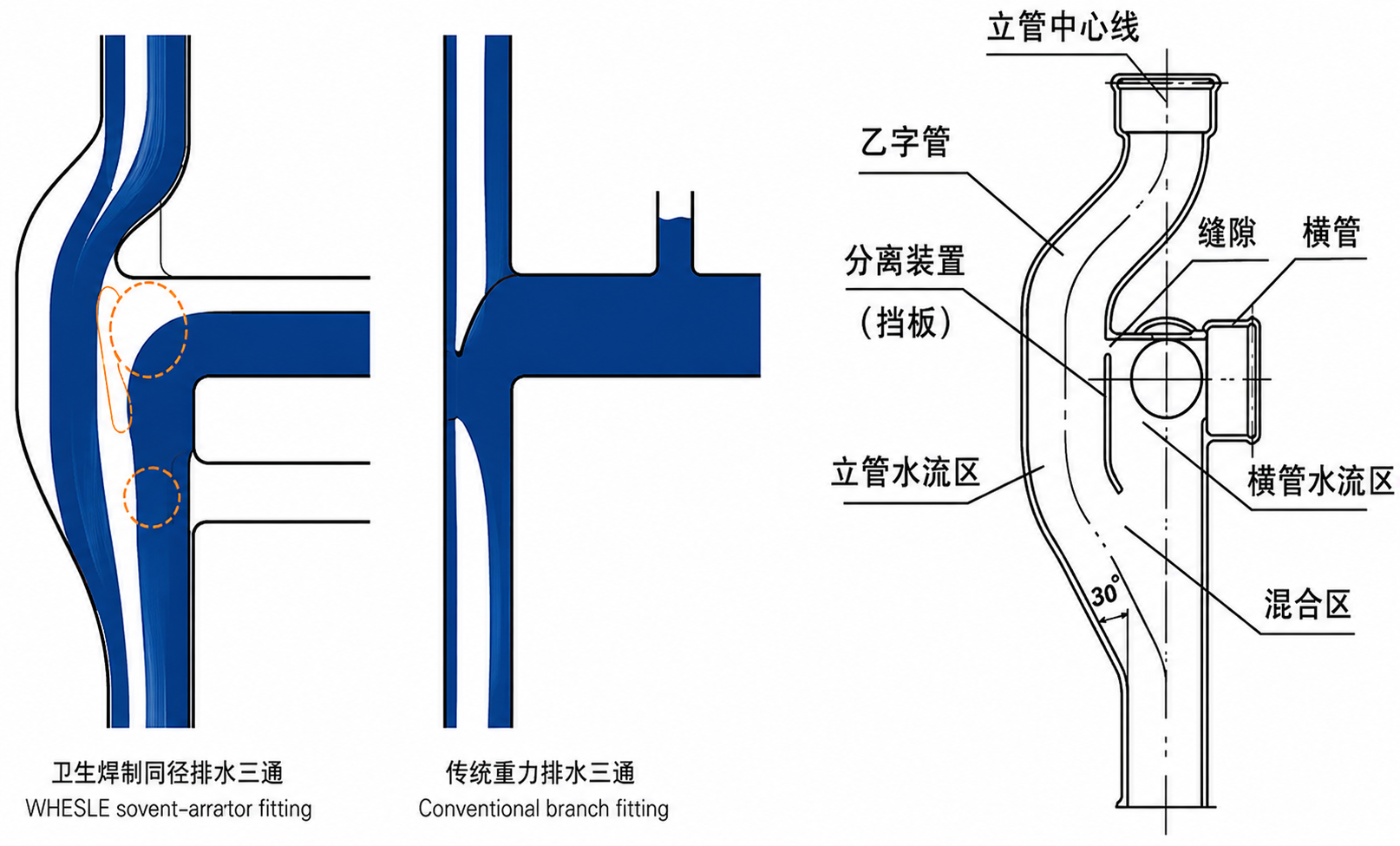
Ans) Aerators are used for velocity breaking and venting.
3) After how many floors are velocity breakers provided?
Ans) Velocity breakers are provided after every 4 floors.
4) Where are the vent pipes provided or the vents are required?
Ans) Vent pipes or vents are provided on the first and last manhole, Pressure breaking
manhole, water tanks, sump pumps, and drainage risers on every floor.
5) What are PPr, PVC & uPVC pipes?
Ans) PPr: Polypropylene Resistance - for the plumbing system.
PVC: Poly Vinyl Chloride - for the drainage system.
uPVC: Unplasticized Poly Vinyl Chloride. Drainage system.
mPVC: Modified unplasticized Poly Vinyl pipes - for underground drainage systems.
mPVC: Modified unplasticized Poly Vinyl pipes - for underground drainage systems.
6) What is the water seal in the floor trap?
Ans) It is the depth/level of water which is maintained inside the floor trap to avoid odor.
7) What is the difference between a floor trap & gully trap?
Ans) A Floor trap is installed inside the bathroom or inside the building, and individual bathtubs, washbasins, and AC drains are connected to it.
A Gully trap is installed outside the building, and a waste riser from the building is connected to the gully trap before the authority sewer manhole.
8) What is the difference between a gully trap and a catch basin?
Ans) Gully trap is installed outside the building and a waste riser from the building is connected to the gully trap before the authority sewer manhole.
A catch basin is used to collect water from the floors/basements. Mostly, it is provided with a sand trap bucket.
9) What are the typical outlet sizes of wash basins, kitchen sinks, bathtubs, WC & floor trap pipes?
Ans)
- Wash Basin – 032 mm
- Kitchen Sink – 040 mm
- Bathtub / Shower Tray – 040 mm
- Water Closet – 0100 mm
- Floor Trap – 075 mm
- Washing Machine – 040 mm
- Balcony Drain – 050 mm
10) What is a grease trap and where it is used?
Ans) Grease trap is used in commercial kitchens and labor/staff accommodations to avoid greasy/oily particles entering the sewerage line.
There are 3 types of grease traps recommended by DM (Dubai Municipality), depending upon the capacity:
- Type A: Labor accommodation
- Type B: Medium restaurant
- Type C: Hotel kitchen & central kitchen

11) What is the rodding eye?
Ans) Access door is fitted every 12 meters and at every directional change for cleaning purposes.
12) What is the maximum distance between manhole to manhole?
Ans) The maximum distance between two manholes is 15 meters.
13) What is floor clean out?
Ans) Floor clean out is an access door in the floor with a cover provided to facilitate the cleaning of the underground/buried pipes.
14) What is a sand trap?
Ans) It is provided before the sump pit to prevent sand from entering the sump pit. It has a perforated sand trap bucket with a handle.

15) What is a pressure breaking manhole?
Ans) It is used to retard the velocity/pressure from the sump pumps and rooftop swimming pool line before entering the manholes to avoid damage to the manhole.
16) What is the Final Inspection Chamber (FIC)?
Ans) Final Inspection Chamber is provided before the connection to the authority/DM manhole.
Only one inlet and one outlet are there in FIC.
FIC location is given by DM during NOC.
FIC is normally at 90° from the DM manhole.
17) What are the slopes required to be maintained for 100 mm, 150 mm, and 200 mm pipes?
Ans)
- 100 mm – 1:60
- 150 mm – 1:90
- 200 mm – 1:120
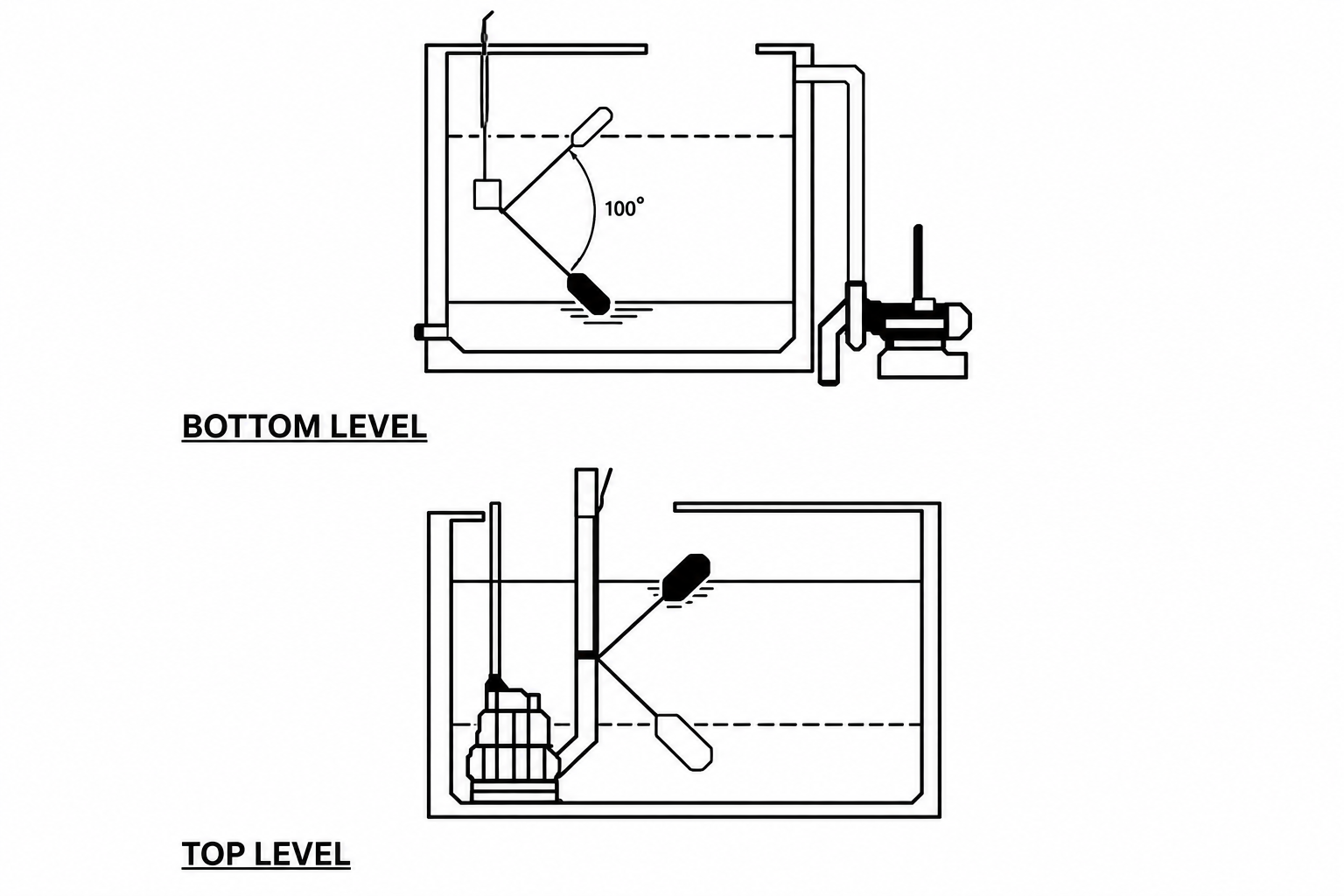
18) What is the function of the float switch in the sump pump?
Ans) It starts and stops the pumps.
It gives a high-level alarm.
- When the first float switch is up, it starts the pump.
- When the second float switch is up, it starts the assisting/standby pump.
- When the third float switch is up, it gives a high-level alarm.
- When all the float switches are down, that means no pump is working.
19) What is a heavy-duty manhole cover, and where is it used?
Ans) Heavy-duty manhole covers have a load-carrying capacity of 400 tons.
They are mainly used in driveways, parking areas, and vehicular traffic areas.
20) What is a medium-duty manhole cover, and where is it used?
Ans) Medium-duty manhole covers have a load-carrying capacity of 250 tons.
They are mainly used in pavements, pedestrian areas, and upstands.